
Green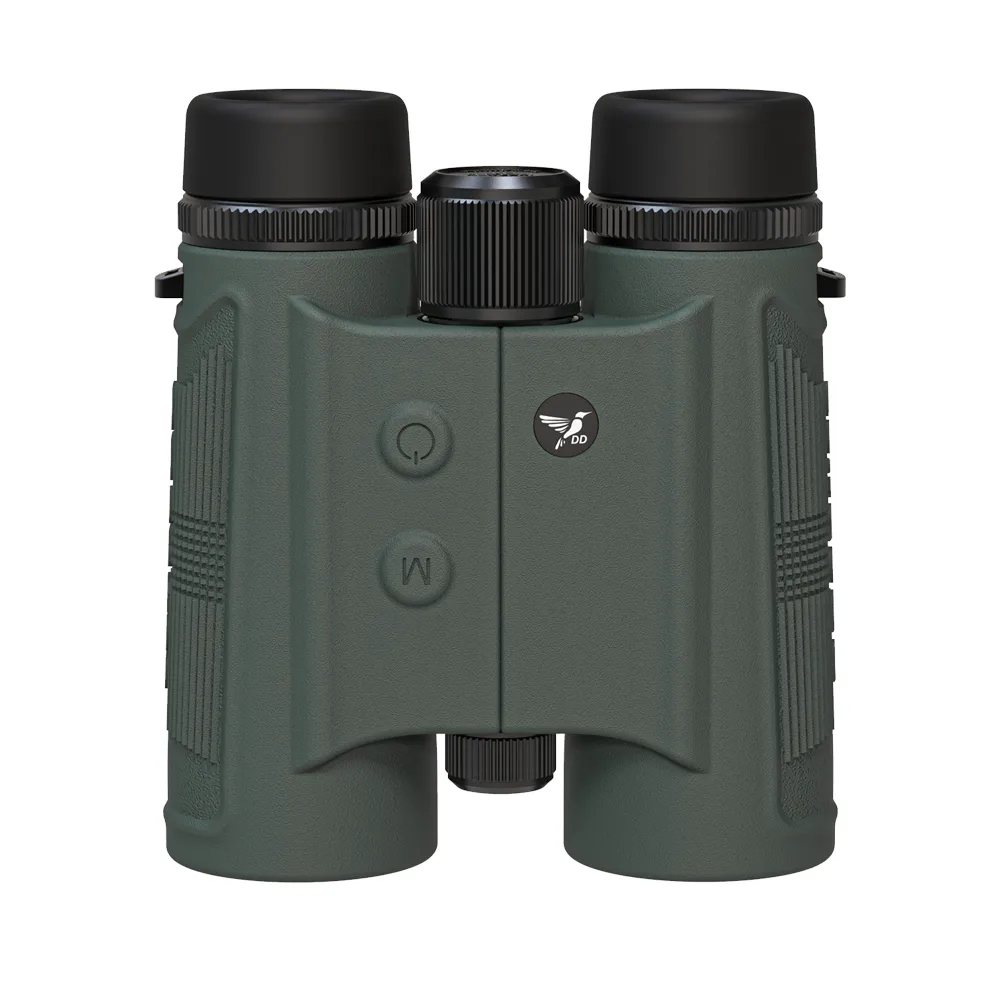
10×42 ED · Green
UltraView Range
For long days on foot and a clear view. The green version combines ED optics with an integrated laser rangefinder.
RRP incl. VAT€548.00*
View product DDoptics · Observe & Measure
See the distance.
Know the distance.
A view across your hunting ground. One press of a button. The distance right in your field of view. Discover UltraView Range and Pirschler Range – two ED binocular series for hunting, stalking and mountain adventures.
UltraView Range 10×42 ED · 790 g · up to 2,000 m¹Two series. Four versions.
Less weight for long days on foot, or larger objectives and a longer measuring range? Compare the series first. Then choose the colour you prefer: both are available in green and brown.
10×42 ED · Green
For long days on foot and a clear view. The green version combines ED optics with an integrated laser rangefinder.
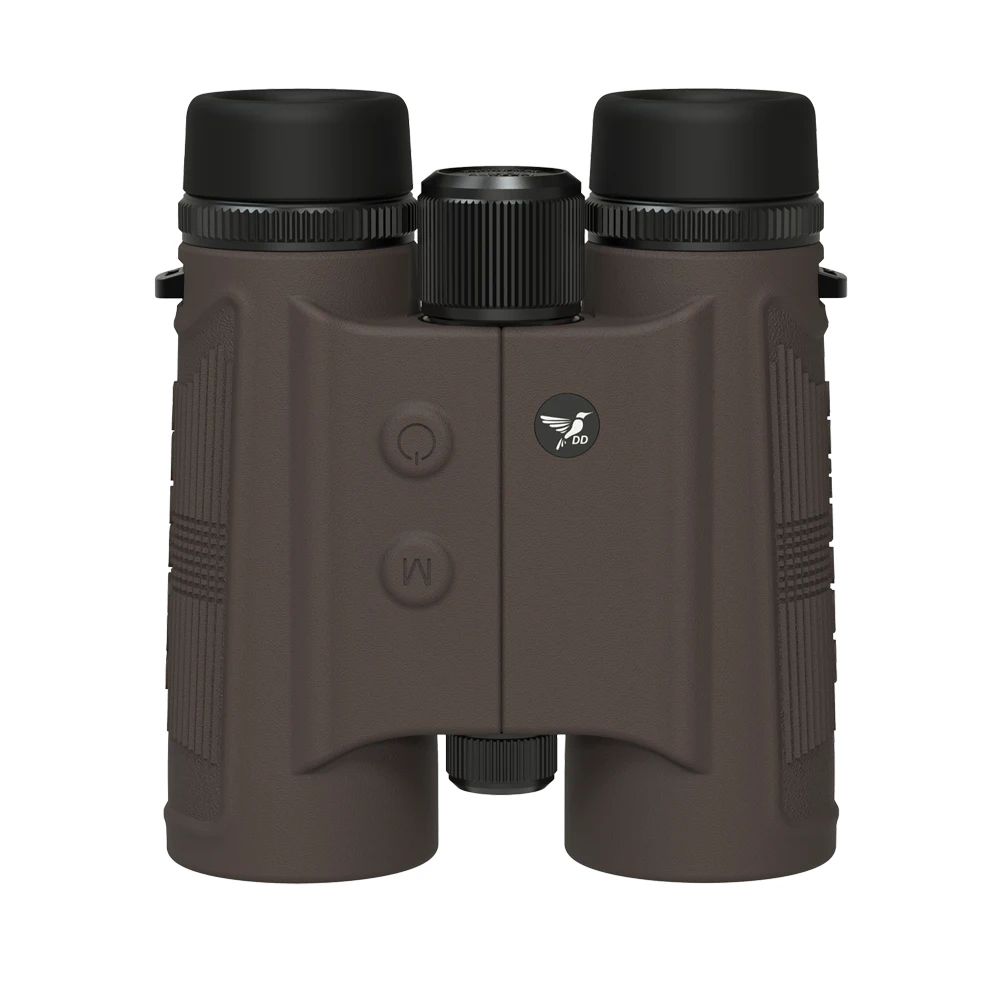
10×42 ED · Brown
A compact rangefinding binocular in earthy brown. The same optics and measuring technology as the green model.
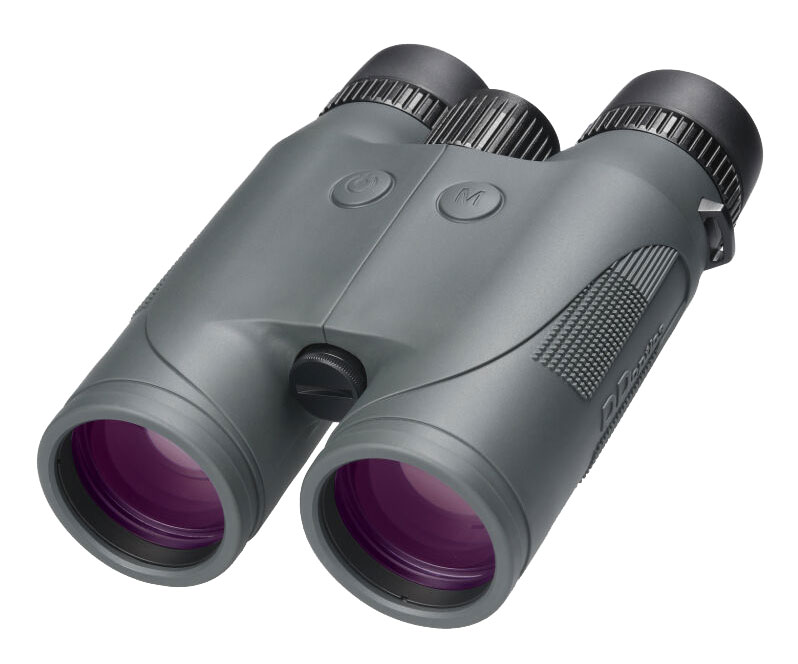
10×45 ED · Green
The green Woodland version with 45 mm objectives, Abbe–König prisms and a robust magnesium housing.
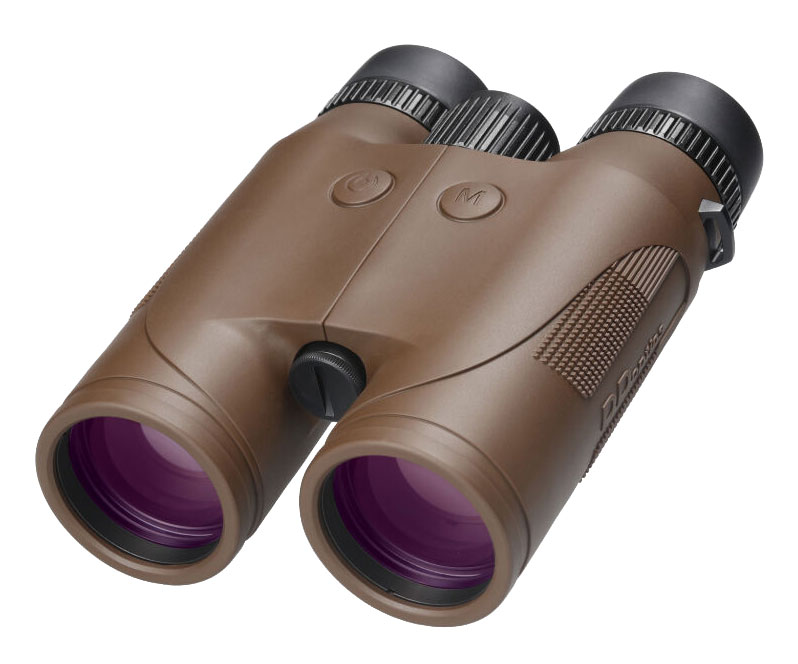
10×45 ED · Brown
A classic hunting look in brown. Its optical and measuring specifications match the green version.
* RRP = manufacturer’s recommended retail price. All prices include VAT. See each product page for the current selling price, offers and availability. Shipping charges may apply.
¹ Maximum measuring range under suitable conditions on highly reflective targets. Actual range depends on factors including target size, reflectivity, humidity and atmospheric turbulence.
Find the right model
UltraView Range · 10×42 ED
The lighter choice for stalking, mountain hunting and long days on foot: ED optics and a laser rangefinder in one compact binocular.
Pirschler Range · 10×45 ED
The choice for a longer measuring range: 45 mm ED objectives and Abbe–König prisms combine in a robust hunting binocular.
¹ Maximum measuring range under suitable conditions; dependent on target and weather. * All prices include VAT. RRP = recommended retail price. Pirschler Range special offer: €999.00; the current product-page price applies.
The differences at a glance
Both series offer 10× magnification and a field of view of 114 m at 1,000 m. Differences include weight, objective diameter, prism system, water protection and maximum measuring range.
| Feature | UltraView Range 10×42 ED | Pirschler Range 10×45 ED |
|---|---|---|
| Magnification / objective | 10× / 42 mm | 10× / 45 mm |
| Weight | 790 g | 1,018 g |
| Laser measuring range¹ | up to 2,000 m | up to 3,000 m |
| Display | Illuminated LCD, five brightness levels | OLED |
| Field of view at 1,000 m | 114 m | 114 m |
| Optics | ED glass, BaK4 roof prisms | ED glass, Abbe–König prisms |
| Coatings | Multi-coating, phase correction and dielectric prism coating | FBMC and Laser-Coating |
| Housing | Magnesium | Magnesium |
| Water protection | IPX7 | IPX5 |
| Colours | Green / Brown | Green / Brown |
| RRP incl. VAT* | €548.00 | €1,389.00 |
| Current special offer incl. VAT* | — | RRP €999.00 |
Specifications apply to both green and brown versions. ¹ Range depends on target and weather. * All prices include VAT. RRP = recommended retail price; the special offer is shown separately.
One device. Two tasks.
Binoculars with a rangefinder combine two steps: find and observe your subject with both eyes, then measure its distance without switching to another device.
Across open ground, on opposite slopes or in unfamiliar hunting areas, a measured distance adds useful information to what you see. Knowing a distance is different from simply estimating it.
Find your rangefinding binoculars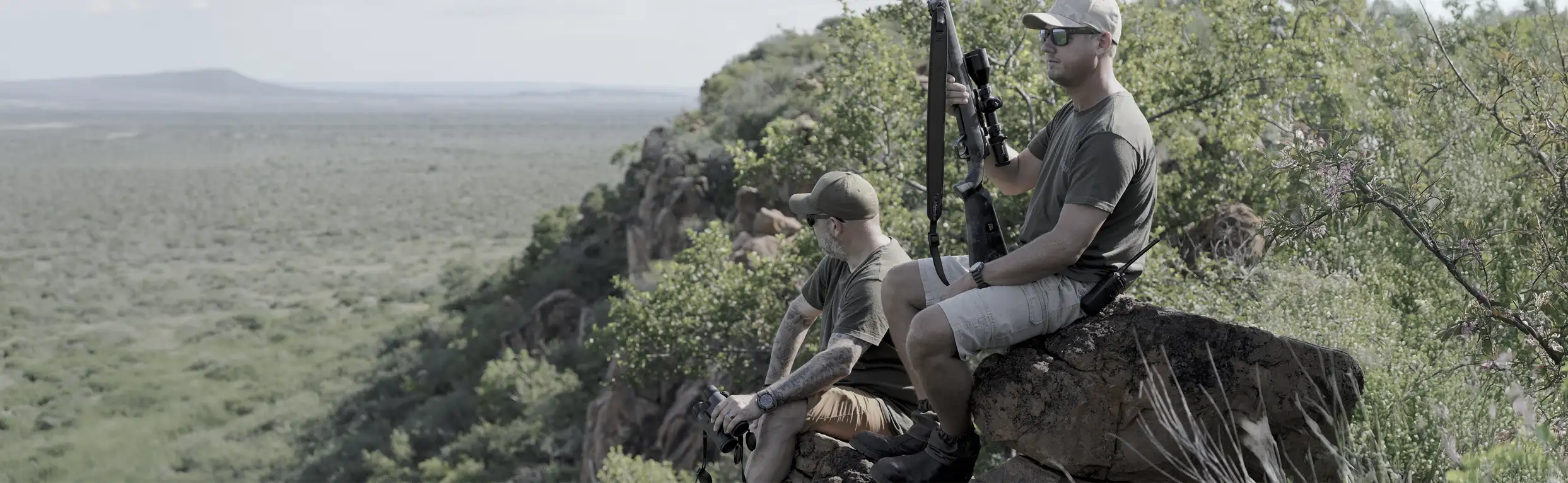
More than a number on a display
ED glass helps reduce distracting colour fringing along high-contrast edges. This is particularly useful when distinguishing fine details against a bright sky or over longer distances.
Lens coatings reduce reflections. In the UltraView, phase correction and dielectric prism coatings complement the ED optics. The Pirschler uses Abbe–König prisms with FBMC and Laser-Coating. The performance of the complete optical system is what matters.
A readable display and accessible controls make distance measurement practical in everyday use. The UltraView LCD has five brightness settings; a low setting is useful when ambient light is limited.
Made for trails, not display cabinets
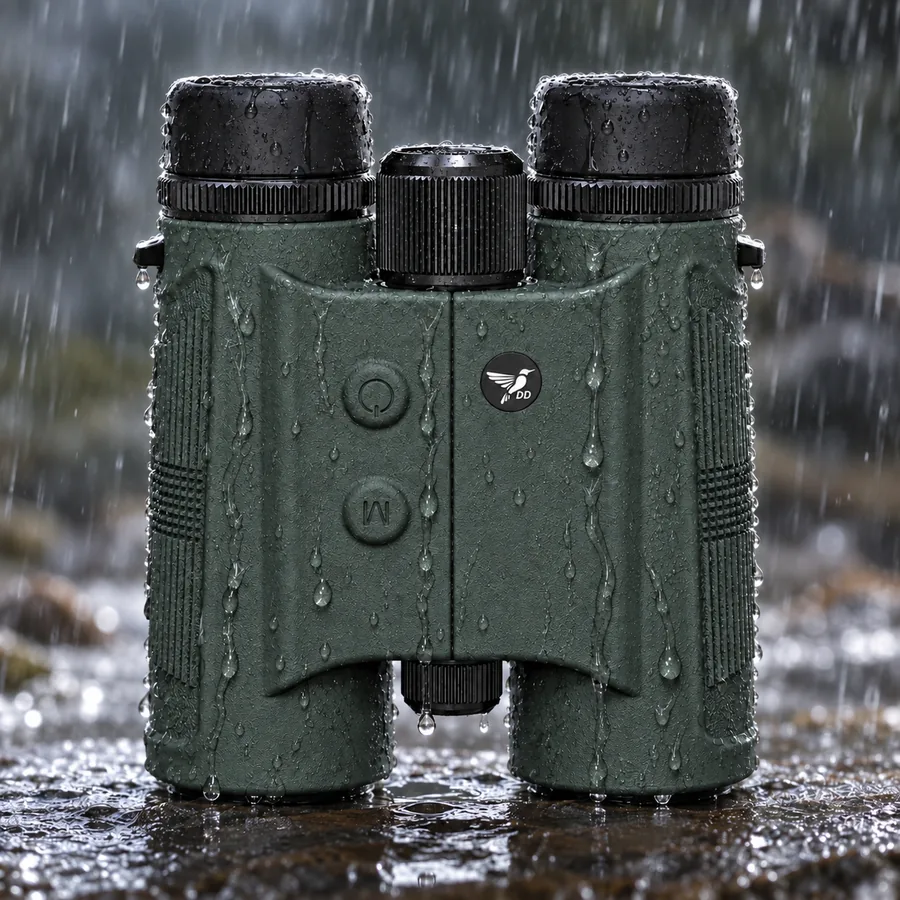
Both series combine a magnesium housing with nitrogen filling. UltraView Range is rated IPX7, while Pirschler Range is rated IPX5. The tested conditions for water protection therefore differ.
Nitrogen filling helps reduce internal fogging. It does not prevent water from collecting on the outer lenses – clean optics and careful handling help keep your view clear.
Before buying, it is also worth trying the eyecups, focus and dioptre adjustment for yourself. Comfortable viewing is especially important if you wear glasses.
Understanding measuring range
The highest figure on a specification sheet is not a guaranteed range for every object. A large, bright target reflects the laser differently from dark fur or a small surface in tall grass. Fog, rain and heat shimmer can also make measurement more difficult.
Do not choose on maximum distance alone. Weight, optical quality, handling and display readability affect every observation.
The measured distance along the line of sight between the binoculars and the target.
On sloping ground, line-of-sight and horizontal distance differ. Additional display information helps distinguish the two.
A distance or angle reading does not replace a complete ballistic solution. Refer to the functions specifically described for each device.
Let your own eyes decide
How do the binoculars feel in your hands? Is the view comfortable? Which display do you prefer? Get to know your preferred optics in person.
Order binoculars to try →See our try-before-you-buy page for the process and conditions.
Know before you buy
From laser measurement to choosing the right series.
They combine optical observation with laser measurement. Once you aim at a target, the device sends a short pulse of light and calculates the distance from the time it takes the reflected signal to return. You read the result directly in the field of view.
If you cover long distances on foot, consider the UltraView Range 10×42 ED at 790 g. The Pirschler Range 10×45 ED offers larger objectives and a longer maximum measuring range, but weighs 1,018 g. Viewing comfort and handling matter just as much as the specifications.
The maximum device range does not apply to every target. The size, surface, angle and reflectivity of the object, together with weather and atmospheric turbulence, affect the result. A small, dark target may provide a significantly shorter measuring range than a large, reflective surface.
RF stands for Range Finder and LRF for Laser Range Finder. These binoculars have distance measurement built in, so you do not need a separate handheld device.
No. An angle or horizontal-distance display provides extra information about the measured distance. On its own, it is not a complete ballistic solution matched to your firearm and ammunition. Always check the functions actually offered by the particular model.
Optical observation works independently of the power supply. The battery is required for electronic distance measurement and the display.
The UltraView Range is rated IPX7 and the Pirschler Range IPX5. Both series are nitrogen-filled. The ratings differ: IPX5 means protection against water jets, while IPX7 covers temporary immersion under specified test conditions. Follow the instructions for the respective model.
Within each series, both colours share the optical and measuring specifications compared here. Choose the series that suits you first, then your preferred colour.
Yes. Visit our try-before-you-buy page for the process and conditions. When it comes to viewing comfort, weight and handling, personal experience is more useful than a specification table alone.