This website uses cookies, which are necessary for the technical operation of the website and are always set. Other cookies, which increase the comfort when using this website, are used for direct advertising or to facilitate interaction with other websites and social networks, are only set with your consent.
Configuration
Technically required
These cookies are necessary for the basic functions of the shop.
"Allow all cookies" cookie
"Decline all cookies" cookie
CSRF token
Cookie preferences
Currency change
Customer recognition
Customer-specific caching
Individual prices
PayPal payments
Selected shop
Session
hide Popups
Comfort functions
These cookies are used to make the shopping experience even more appealing, for example for the recognition of the visitor.
Note
Statistics & Tracking
Affiliate program
Klaviyo
Track device being used
Advanced thermal observation
ATN / Black Edition
ATN Thermal CamerasWhen light fades. Your vision remains.
Explore thermal imaging for your observations. From compact handheld devices to a high-resolution 1280-pixel sensor.
A thermal camera reveals differences in thermal radiation. When observing wildlife, it helps you detect animals when there is no longer enough ambient light for conventional binoculars. The thermal channel does not need an IR illuminator. The detail you can see depends on the sensor, lens, image processing and conditions in the field.
Explore ATN thermal monoculars for single-eye viewing and BinoX thermal binoculars for viewing with both eyes. Compare compact handhelds, models with laser rangefinders and different sensor resolutions. Choose for your intended use, rather than simply the highest magnification.
✓ Thermal imaging day and night✓ Models with laser rangefinders✓ Expert advice from DDoptics
Compact. Clear. Ready to go.
BlazeSeeker 6
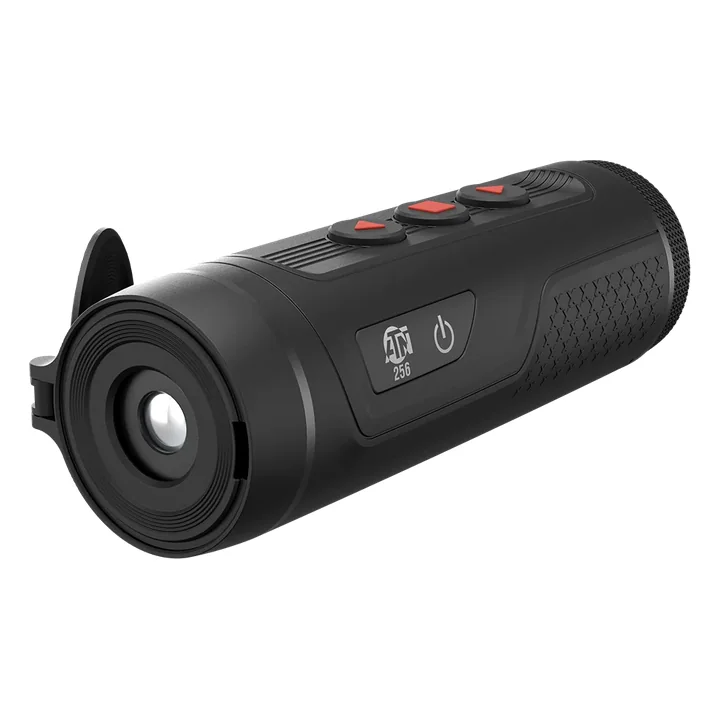
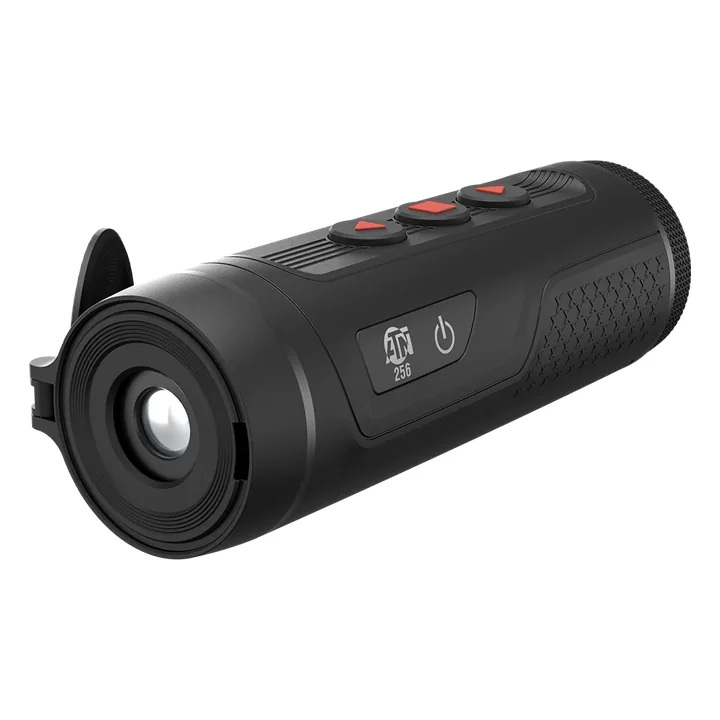
A compact thermal monocular for a quick overview: BlazeSeeker 6 models combine a 256 × 192-pixel sensor with a 7 or 10 mm lens. Focus-free optics simplify operation. Save photos and videos, and connect to a compatible mobile device via Wi-Fi. When choosing, consider field of view, base magnification and your intended observation distance as well as zoom.
ATN · SEEKER
BlazeSeeker 6 207
256×192 sensor
7mm (Ge); F/1.0 lens
Photos, videos & Wi-Fi
32 GB internal storage
✓
IP67 · Protected outdoorsDust-tight & protected against temporary immersion
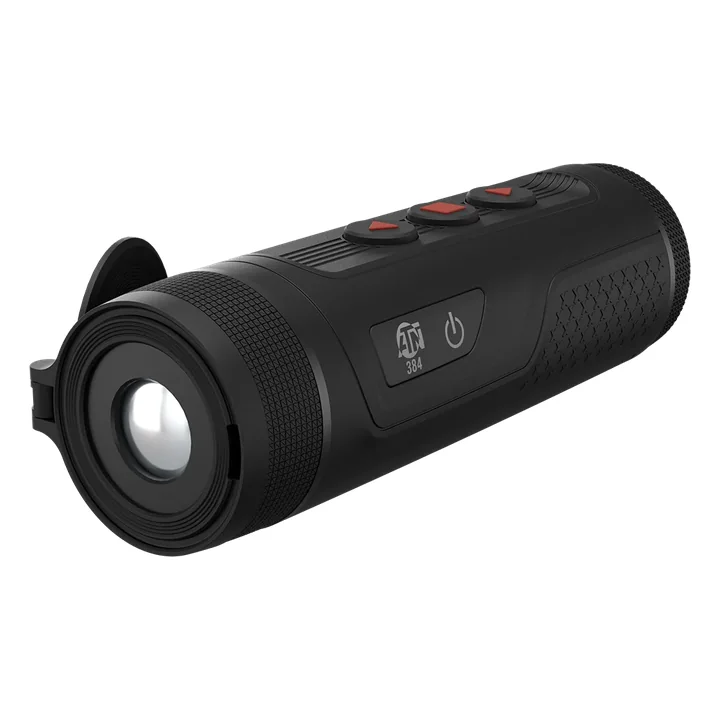
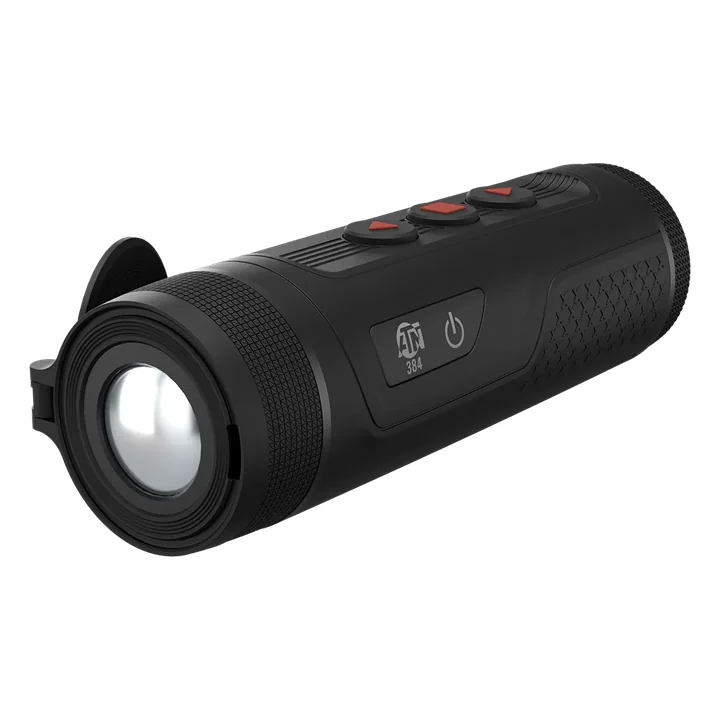
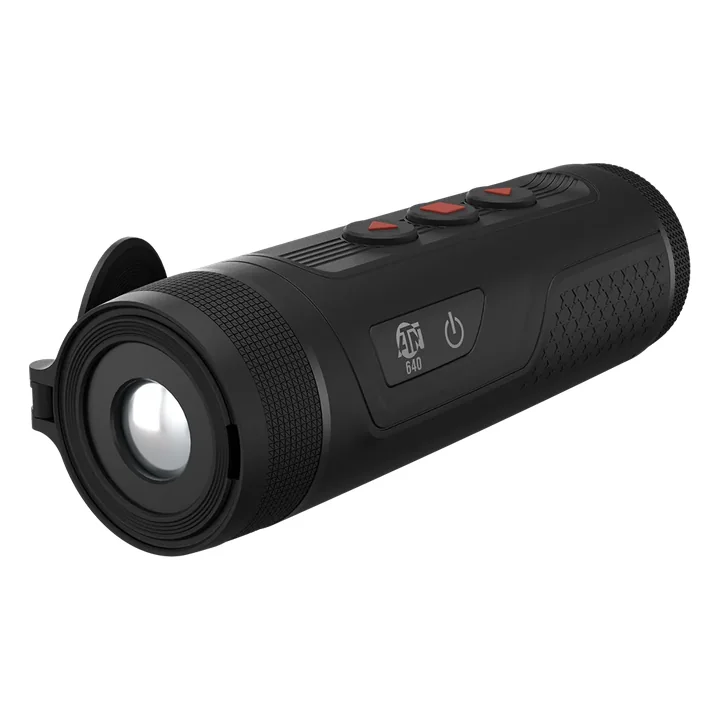
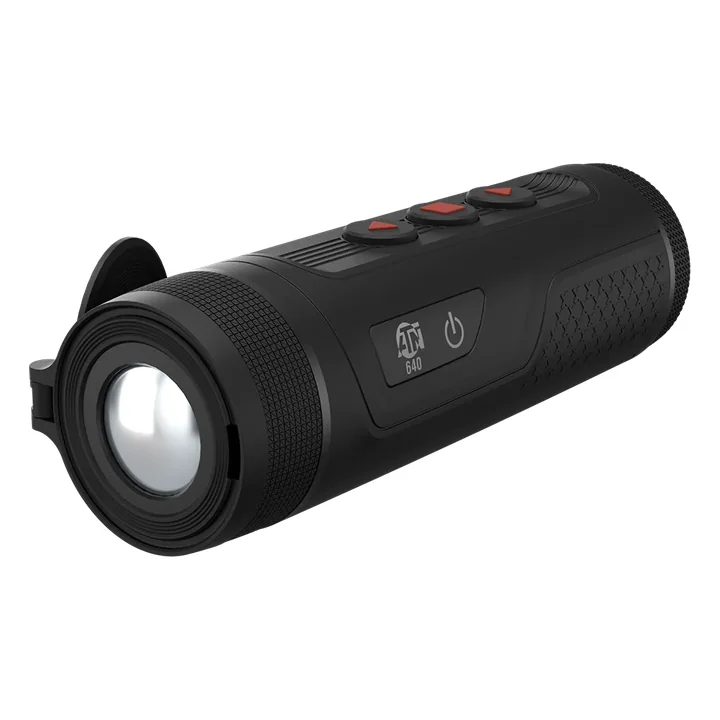
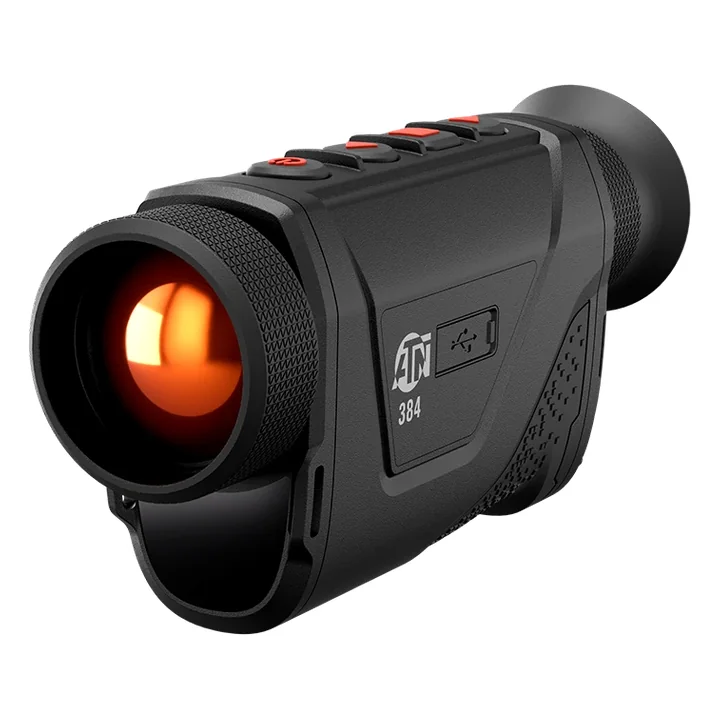
BlazeTrek 6 offers a choice of 384 × 288 or 640 × 512 sensor pixels and a 19 or 25 mm lens. Manual focusing lets you adjust the image to the observation distance. A higher-resolution sensor provides more pixels, but the lens, field of view and image processing also matter. The compact design is made for use on the move.
ATN · TREK
BlazeTrek 6 319
384x288 sensor
19mm (Ge); F/1.0 lens
Photos, videos & Wi-Fi
32 GB internal storage
✓
IP67 · Protected outdoorsDust-tight & protected against temporary immersion
A thermal device with a rangefinder combines thermal observation with distance measurement. The BlazeHunter LRF models shown here have an integrated laser rangefinder and differ in sensor and lens specifications. Replaceable batteries are practical for longer outings; total runtime figures involving multiple batteries require a battery change.
ATN · HUNTER
BlazeHunter 335 LRF
384x288 sensor
35 mm lens
Integrated laser rangefinder
32 GB internal storage
✓
IP67 · Protected outdoorsDust-tight & protected against temporary immersion
The sensor captures thermal information. The display presents it. Choose the combination that suits your needs, rather than simply the highest zoom factor.
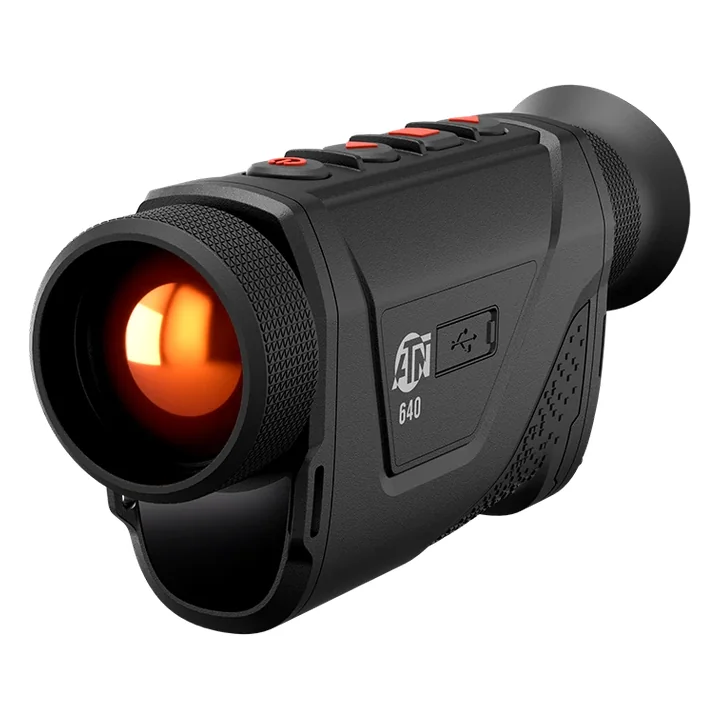
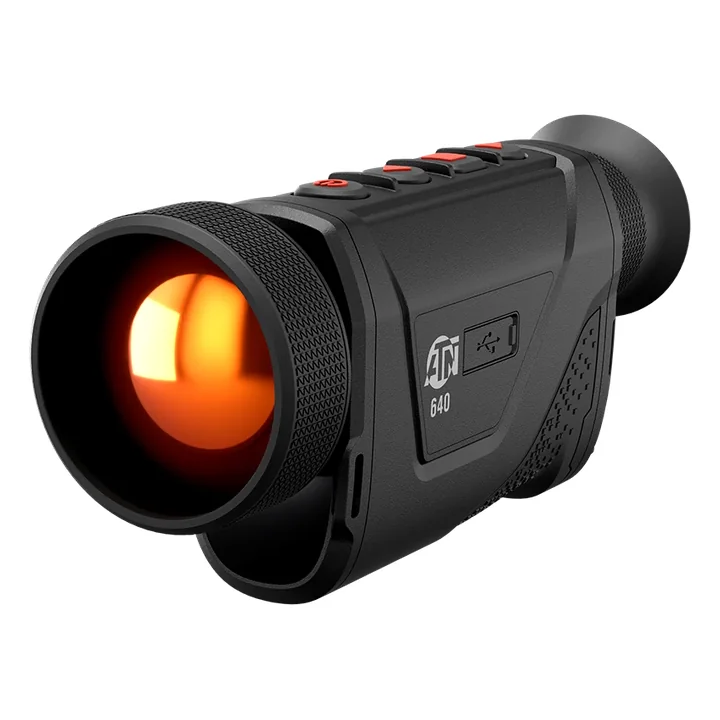
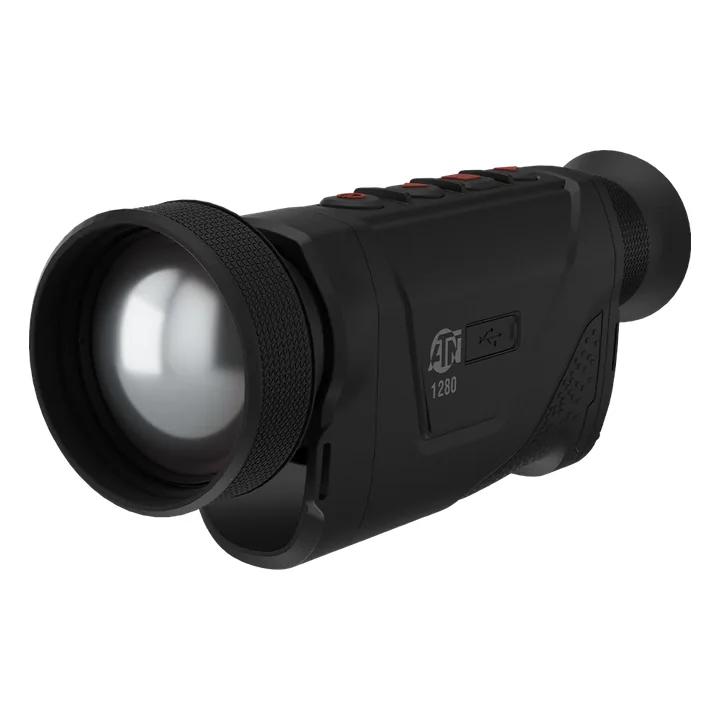
The BlazeHunter XD is a thermal monocular with 1280 × 1024 native sensor pixels — 1,310,720 pixels in total. It combines a 50 mm lens, an OLED display and an integrated laser rangefinder. ATN describes SharpIR as image processing designed to improve contrast and detail. A high-resolution display presents the processed image; it does not add native sensor resolution.
ATN · XD
BlazeHunter XD
1280 × 1024 sensor
50mm (Ge); F/1.0 lens
Integrated laser rangefinder
32 GB internal storage
✓
IP67 · Protected outdoorsDust-tight & protected against temporary immersion
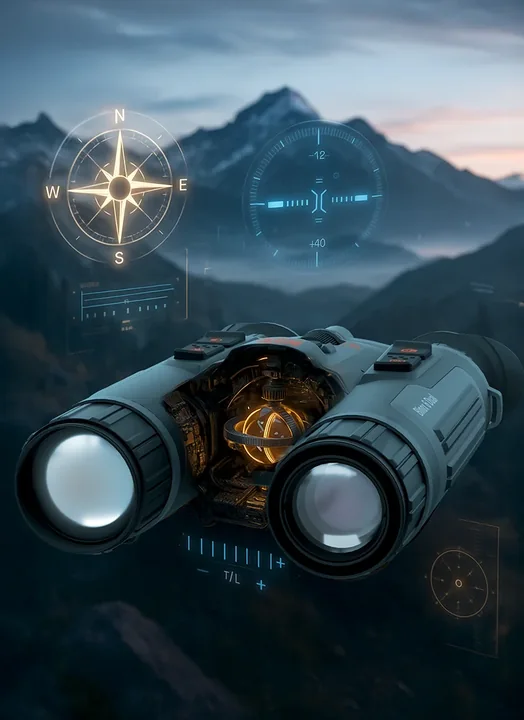
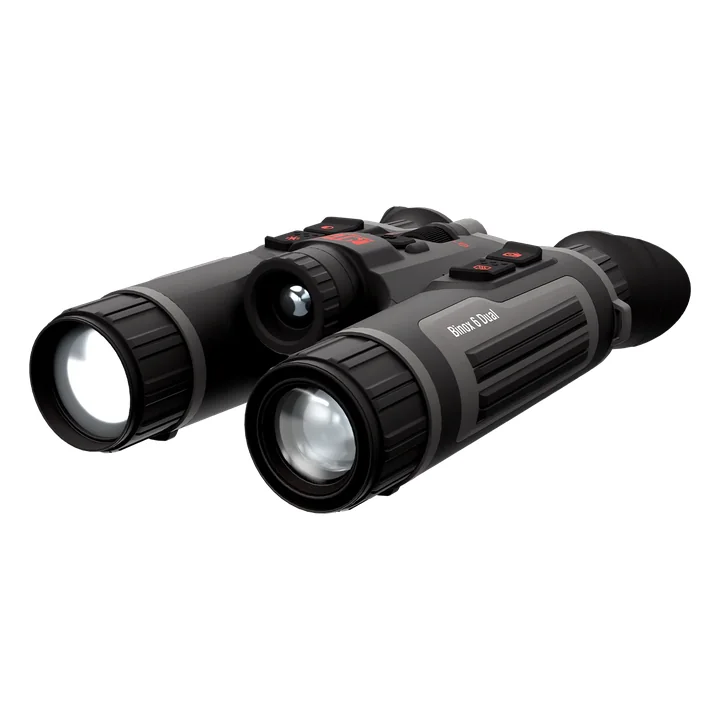
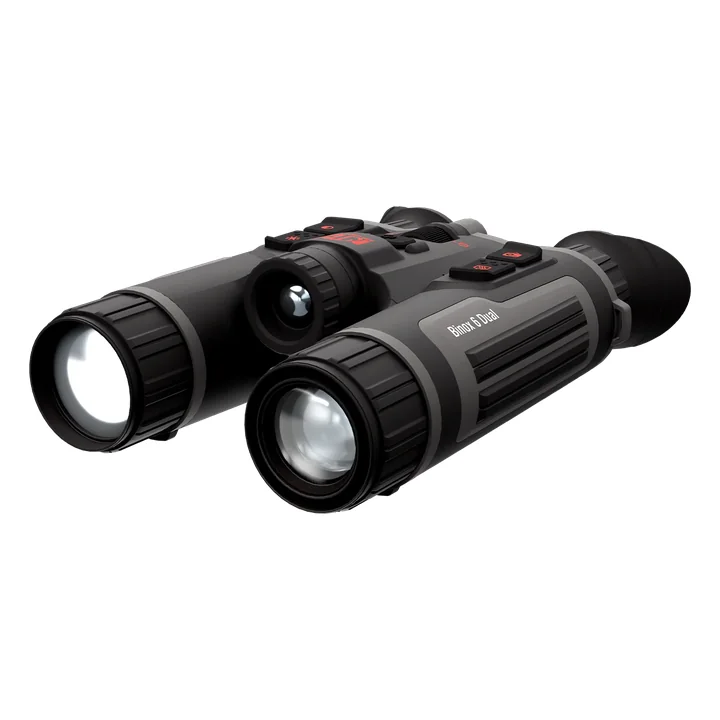
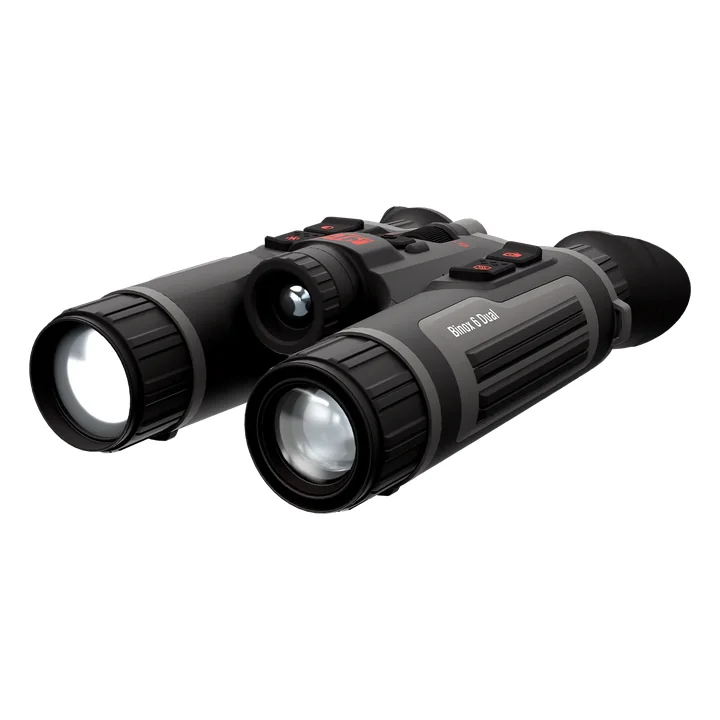
Thermal binoculars let you observe with both eyes. The BinoX 6 Dual series combines a thermal channel with a separate digital day/night channel. When comparing specifications, remember that 4K refers to the digital channel, not the thermal sensor. The three models offered here have different thermal resolutions. An integrated rangefinder complements observation.
ATN · BINOX
BinoX 6 Dual 225
256x192 sensor
25 mm; F/0.9 lens
Integrated laser rangefinder
Separate 4K day/night channel
✓
IP67 · Protected outdoorsDust-tight & protected against temporary immersion
Day, night, twilight and thermal imaging: BinoX 6 Dual combines different viewing modes in one device. This technology section covers the features ATN describes for the 640 model. They do not necessarily apply to every thermal device.
WDR
More detail in warm and cool areas
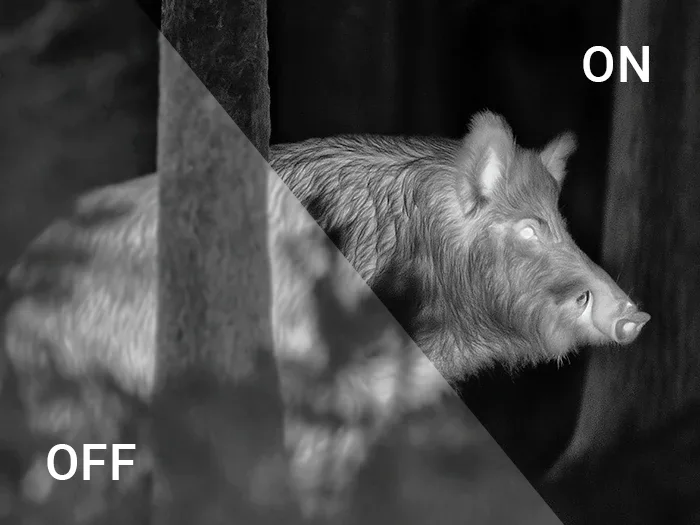
Wide Dynamic Range balances strong brightness differences in the thermal image. It is designed to keep cooler areas visible alongside particularly warm objects. The ATN illustration demonstrates the function schematically.
ATN manufacturer illustration
DeFog
Supporting contrast in challenging conditions
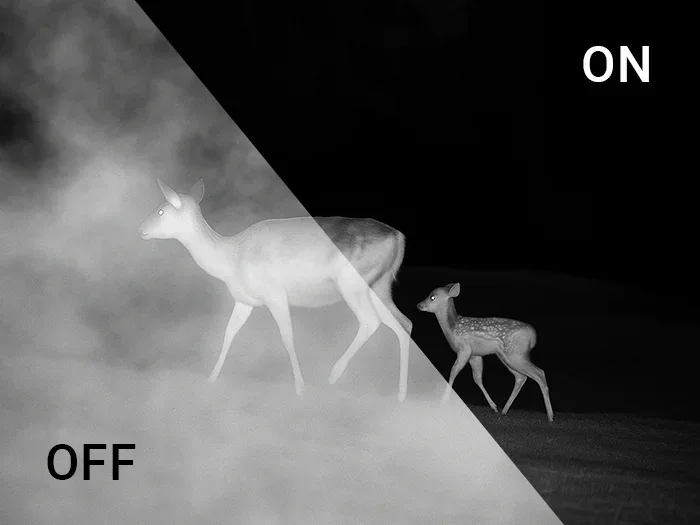
DeFog is image processing designed to support contrast and sharpness in mist or fog. It cannot recover unlimited missing image information. Scene visibility still depends on weather and temperature differences.
ATN manufacturer illustration
Smart IR
Light for the digital night channel
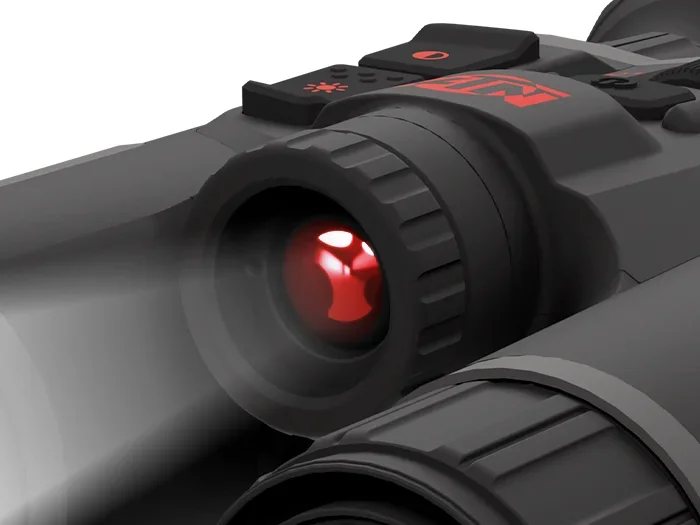
Smart IR adjusts the brightness of the IR illuminator to the surroundings. This illumination supports the digital night channel. The separate thermal channel detects thermal radiation and does not need an IR illuminator.
ATN manufacturer illustration
Dual View
Two perspectives on one display
These thermal binoculars combine thermal viewing with a digital day, night or twilight image. Switch between the main view and the inset image to consider thermal information alongside the visible surroundings.
ATN manufacturer illustration
Hot Point Tracking
Keep the hottest area in view
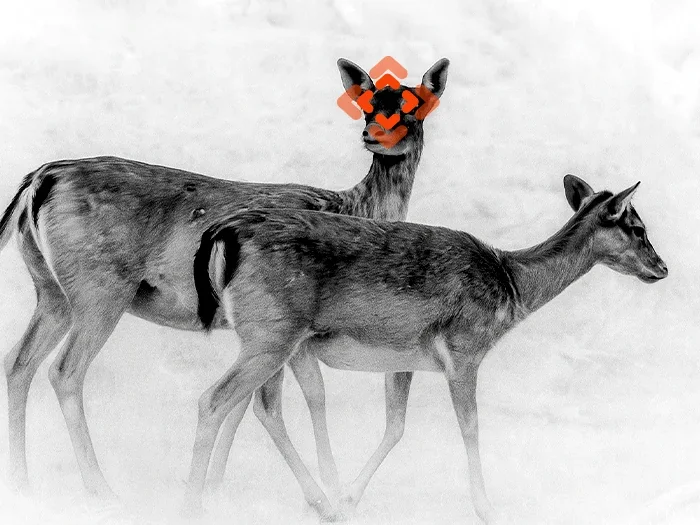
This function highlights the hottest area in the displayed scene, helping you navigate the thermal image. The marker is not automatic animal recognition or reliable object identification.
ATN manufacturer illustration
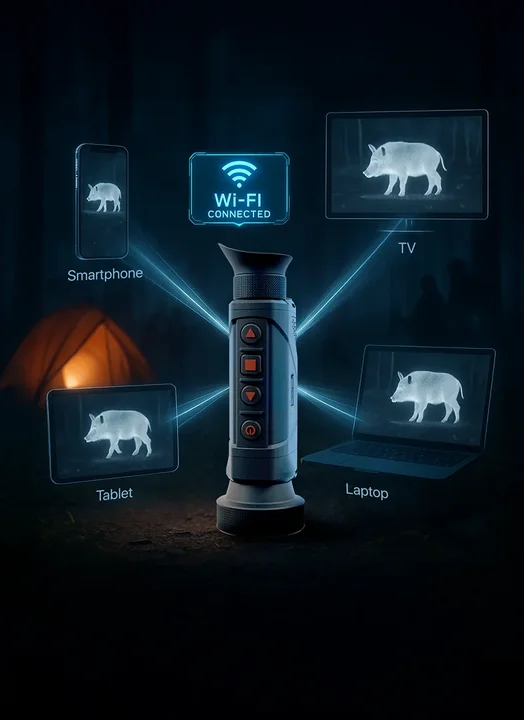
Wi-Fi & ATN Connect 6
Save and share your observations
BinoX 6 Dual connects to a compatible smartphone or tablet via Wi-Fi. ATN Connect 6 supports live viewing and file transfer. Photos and videos can also be saved to the internal 64 GB storage and viewed in the device gallery.
ATN manufacturer illustration
Feature specifications: ATN BinoX 6 Dual 640. The ON/OFF images are unaltered manufacturer illustrations, not interactive before-and-after recordings.
Beyond the specifications
See the thermal image. Understand the differences.
SharpIR: image processing explained
For the BlazeHunter XD, ATN describes SharpIR as AI-assisted thermal image processing designed to enhance outlines and contrast. The manufacturer demonstration illustrates the advertised effect.
More image contrast is not the same as more native sensor pixels. Thermal imaging cannot see freely through solid obstacles; vegetation, weather and low temperature contrast can limit observation.
ATN manufacturer demonstration · Click to play
ATN manufacturer demonstration · Click to play
Colour modes: the same scene, a different view
ATN lists six colour palettes for BlazeHunter XD: White Hot, Black Hot, High Red, Iron Red, Green Hot and Sepia. They translate thermal information into different brightness levels and colours. The most comfortable view depends on your surroundings and personal preference.
A colour palette changes the presentation, not the physical sensor resolution. In the original demonstration, you can watch the transitions, pause and use the timeline to select individual moments.
OLED display, recording and Wi-Fi
A thermal monocular can do more than observation alone. Depending on the model, you can save photos and videos to internal storage and connect to a compatible smartphone or tablet over Wi-Fi. The appropriate app and available features depend on the series.
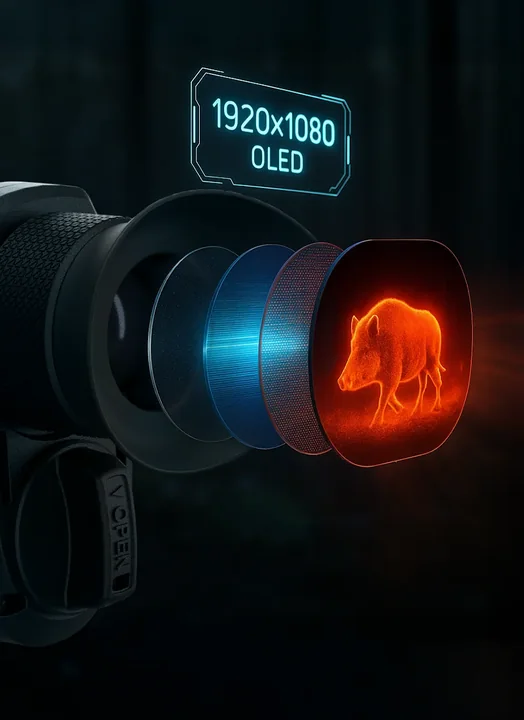
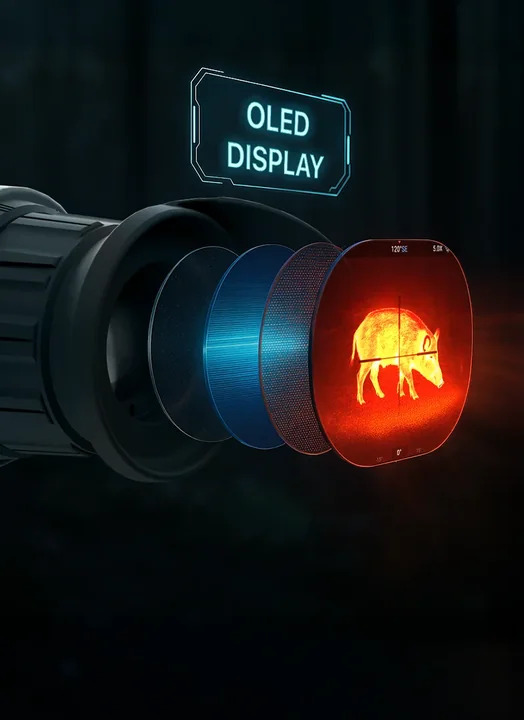
BlazeHunter XD provides 32 GB of internal storage. Its OLED display has a resolution of 1920 × 1080 pixels. Sensor resolution, display resolution and recording format describe different characteristics, so we list them separately in the product specifications.
Which sensor resolution suits you?
256 × 192, 384 × 288, 640 × 512 or 1280 × 1024: these figures describe the native pixels of the thermal sensor. More pixels can capture finer structures. Always compare devices together with their lens, field of view and base magnification. Digital zoom enlarges existing image information.
Thermal monocular or thermal binoculars?
A monocular is used with one eye; thermal binoculars are used with both. A compact monocular can be practical for short observations and frequent pocket storage. Binocular viewing may be more comfortable during longer sessions. Weight, controls and individual viewing comfort matter too.
What does NETD tell you?
NETD describes the thermal sensitivity of a sensor system. Under comparable test conditions, a lower value can indicate better discrimination of small temperature differences. The figure alone does not guarantee a particular range or a better image in every situation.
Detection is not identification
Detecting a heat signature does not mean that you can reliably identify an animal. Distance, target size, humidity and temperature contrast affect the available image information. Detection range should therefore not be treated as a general promise of identification capability.
Outdoors with ATN
Observe. Capture. Rediscover.
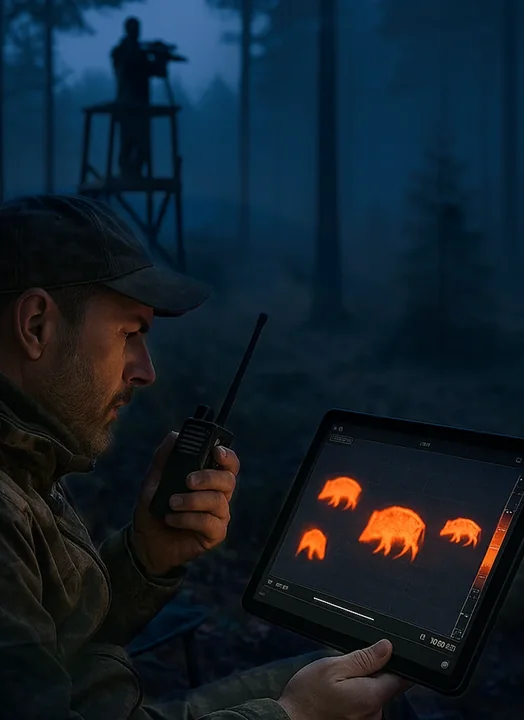
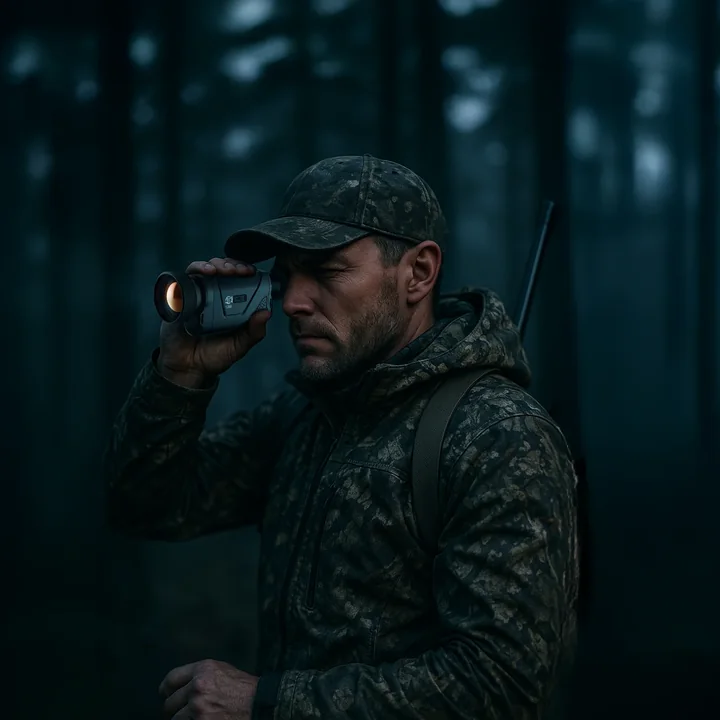
Nature and wildlife observation
Detect heat signatures, then assess the scene carefully.
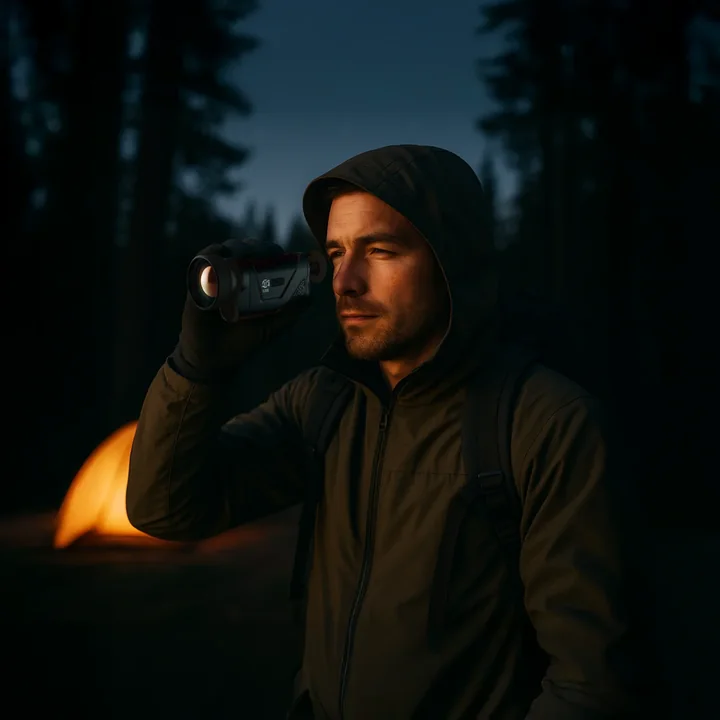
Exploring outdoors
A handy thermal device to complement your equipment after dark.
Application and display images are manufacturer illustrations, not a guaranteed representation under all operating conditions.
✓IP67Protection rating
At home outdoors
Made for the outdoors.
Damp meadows, dusty trails and long nights outdoors: your thermal camera needs to do more than deliver a good image. According to ATN, all 13 devices shown here have an IP67 rating — from the compact BlazeSeeker to BlazeHunter XD and BinoX 6 Dual thermal binoculars.
✓ Dust-tight✓ Protected against temporary immersion
Protection applies under the specified test conditions and with covers properly closed. Not intended for continuous underwater use.
This website uses cookies, which are necessary for the technical operation of the website and are always set. Other cookies, which increase the usability of this website, serve for direct advertising or simplify interaction with other websites and social networks, will only be used with your consent.