
How the mirrors fold the light path
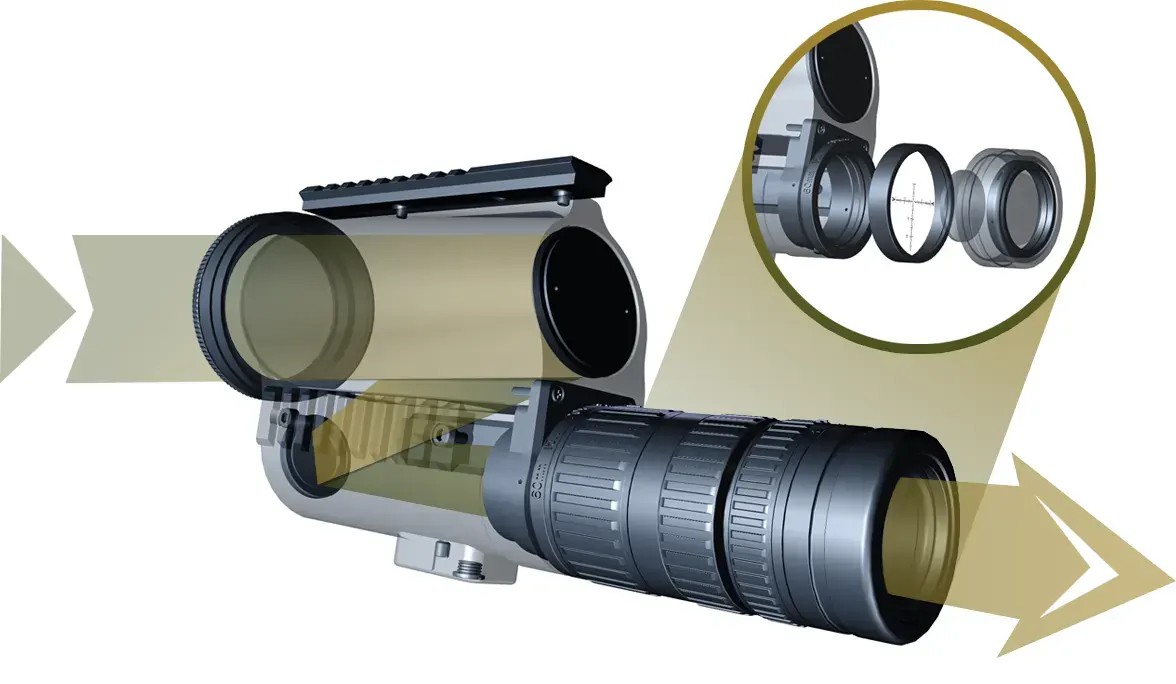
In this Maksutov-Cassegrain system, light enters through a meniscus lens. Two mirrors fold the light path so that a long optical path fits inside a short tube. The cutaway traces the light all the way to the eyepiece.
The ED glass in the 60 mm objective reduces colour fringing at high-contrast edges, such as dark feathers against a bright sky.
At 15×, the wide view makes it easier to find your subject. At 45×, you can pick out feather markings or craters near the Moon’s edge. A steady tripod helps keep the view still. On warm days, heat shimmer can blur fine details even at high magnification.
Adjusting zoom and focus at the eyepiece
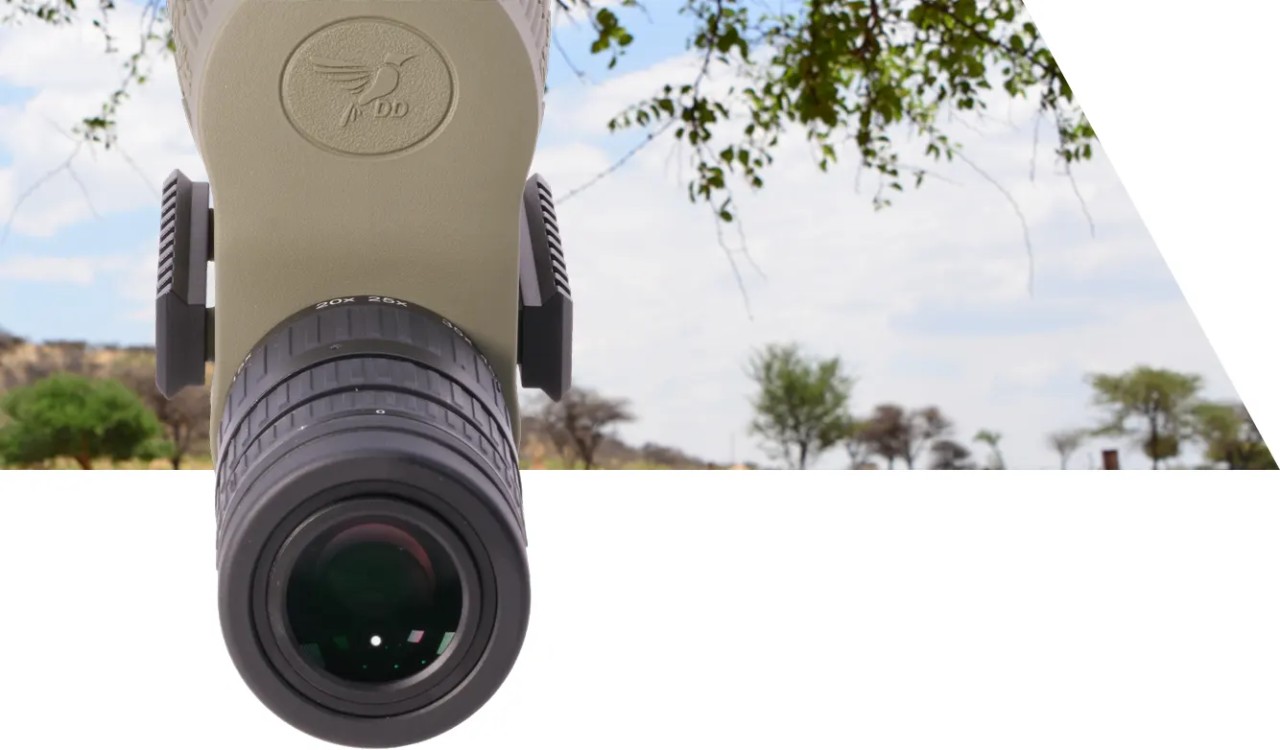
Looking through the eyepiece
Twist the eyecup to adjust the distance between your eye and the eyepiece. The zoom ring lets you vary magnification continuously from 15× to 45×.
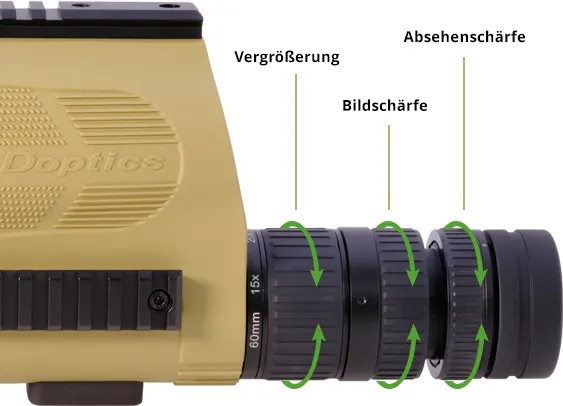
Three independent adjustment rings
The centre ring brings your subject into focus. Reticle sharpness is adjusted separately. The diagram shows where each ring sits on the eyepiece.

The DDMP-MIL reticle
The reticle sits in the first focal plane, so its apparent size changes along with the image as you zoom.

DDMP Spotter housing and accessories
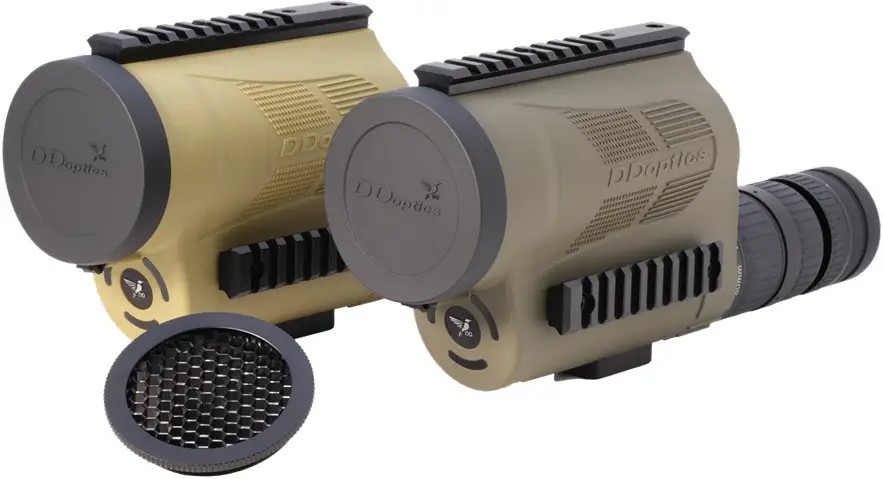
Magnesium body with textured rubber armour
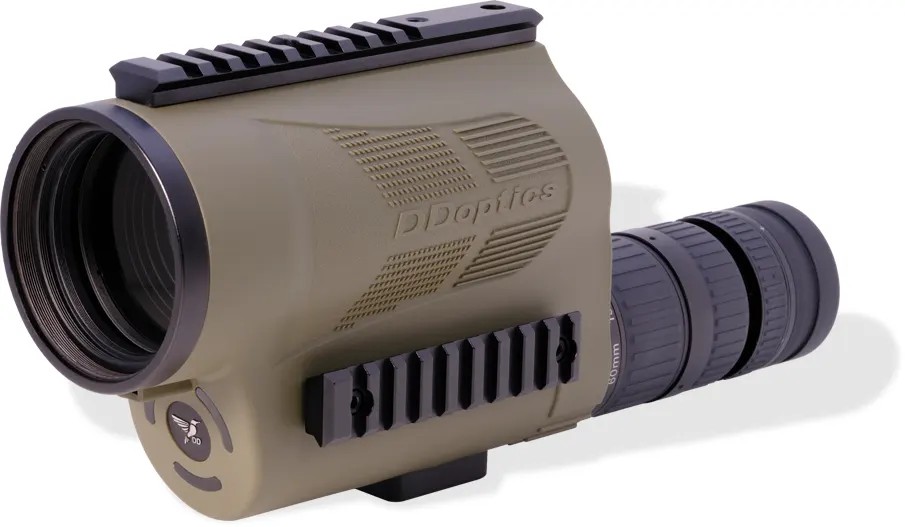
Both versions have a waterproof magnesium body. Ribbed rubber armour provides grip, and the honeycomb sunshade shields the objective from stray light entering from the side.
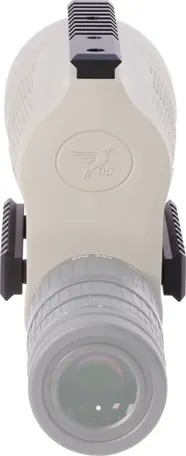
Three mounting rails
The front view shows the mounting surfaces on the top and sides of the body.
 Waterproof
 Nitrogen-filled
 Dustproof
 Non-slip grip
DDMP Spotter specifications
- Magnification
- 15–45×
- Objective diameter
- 60 mm
- Optical system
- Maksutov-Cassegrain
- Reticle
- DDMP-MIL, first focal plane
- Body
- Rubber-armoured magnesium
- Colours
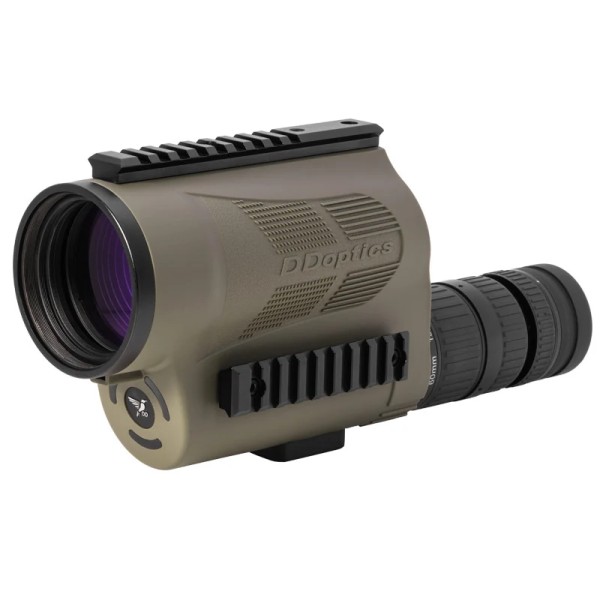
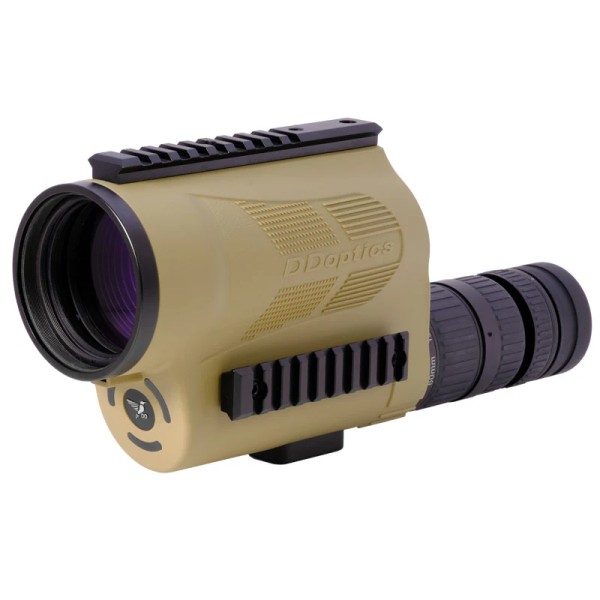
- Olive green and desert sand